


Can a Dog Bed Be Washed? Everything You Need to Know About Keeping Your Dog's Bed Clean
The short answer is yes — and it matters far more than most owners realize.
We invest in our dogs' nutrition, their vet care, their exercise. But the place where they spend more than half of their lives — pressed against the same surface, night after night — is often the last thing we think to clean. A dog bed that isn't washed regularly isn't just unpleasant. It can become a genuine risk to your dog's health, and to yours.
Here is everything you need to know.
Why Washing Your Dog's Bed Actually Matters
Your dog's bed accumulates more than you might think. Shed fur, dried saliva, dander, outdoor debris tracked in on paws, and the natural oils from your dog's coat all build up over time. In a warm, compressed environment — exactly what a well-used dog bed is — bacteria and fungi find ideal conditions to multiply.
Research confirms what common sense suggests: unwashed bedding can harbor bacteria and fungi that trigger skin infections, hot spots, and yeast infections in dogs. Dogs are already susceptible to staphylococcal skin infections — studies show Staphylococcus pseudintermedius is among the most common causes of canine skin conditions — and a chronically dirty sleeping surface can be a contributing factor. Beyond your dog, unwashed pet bedding can also affect the wider household: dust mites, allergens, and certain bacteria can be transmitted to humans, particularly to children, older adults, and anyone with a compromised immune system. Ohio State University's veterinary health guidance specifically lists regularly washing dog bedding as one of the key steps to protecting both dogs and their owners.
None of this needs to be alarming. A clean bed, washed consistently, removes the risk entirely.
How Often Should You Wash a Dog Bed?
As a general rule, once a week is ideal for most households. For dogs who spend a lot of time outdoors, dogs who are prone to skin conditions, puppies who are still toilet training, and older dogs who may have occasional accidents, more frequent washing is worth the effort.
Between washes, a quick vacuum or lint roll removes loose fur and surface debris, and a light air in sunlight — which is a natural disinfectant — helps keep odors at bay.
If the bed smells, shows visible soiling, or your dog has been unwell, wash it immediately rather than waiting.
Can a Dog Bed Go in the Washing Machine?
For most dog beds with removable covers, yes — and it is by far the most effective method. A washing machine with a good cycle and agitation reaches levels that hand washing cannot replicate, which matters when you are trying to remove bacteria and allergens rather than simply surface dirt.
The key is to follow the care instructions for the specific fabric. Natural fibers like cotton may shrink on a hot wash, so a cold cycle is often recommended to preserve the fabric while still cleaning effectively.
One practical note: always run an empty rinse cycle after washing a dog bed cover to clear any loose fur from your machine drum.
Can a Dog Bed Go in the Dryer?
For many dog beds, machine drying is not recommended — particularly those with natural fabric covers, which can shrink, pill, or lose their shape in a hot dryer. Hang drying is gentler on fabric, more effective at preserving the cover's fit over time, and has the added benefit of fresh air exposure which helps with deodorizing. If you need to speed up drying, a low-heat setting with a short cycle is safer than high heat.
Can Dog Bed Foam Be Washed?
The foam interior of a dog bed should never go in the washing machine or the dryer. Submerging foam causes it to absorb water deeply, which takes an extremely long time to dry fully and creates ideal conditions for mold to develop inside the core — precisely the opposite of what you are trying to achieve.
The correct approach is spot cleaning: a damp cloth with mild soap for any visible soiling, then allowing the foam to air dry fully before replacing the cover. For deeper freshening, sprinkling baking soda over the foam and leaving it for an hour before brushing off can help neutralize odors without moisture.
How to Waterproof a Dog Bed
The most reliable approach is to choose a bed that is already designed with waterproofing built in, rather than applying sprays or treatments after the fact. Many waterproofing sprays contain chemicals that can irritate a dog's skin or respiratory system — and a dog who sleeps with their face pressed to a surface for fourteen hours a day is exposed to whatever is on it for a long time.
A built-in waterproof lining between the foam and the outer cover is the gold standard: it protects the foam from accidents, spills, and moisture without the dog ever coming into contact with any chemical treatment.
Where to Wash a Dog Bed
At home in your washing machine is perfectly sufficient for most covers. If your dog bed cover is very large and your home machine is not an appropriate size, a laundromat with a larger capacity machine works well. Avoid using the same wash as your own clothing if you are concerned about allergen transfer.
For the foam base and any non-washable components, a clean outdoor space or a bathtub for spot cleaning is ideal.
Caring for Your Enid Blythe Dog Bed
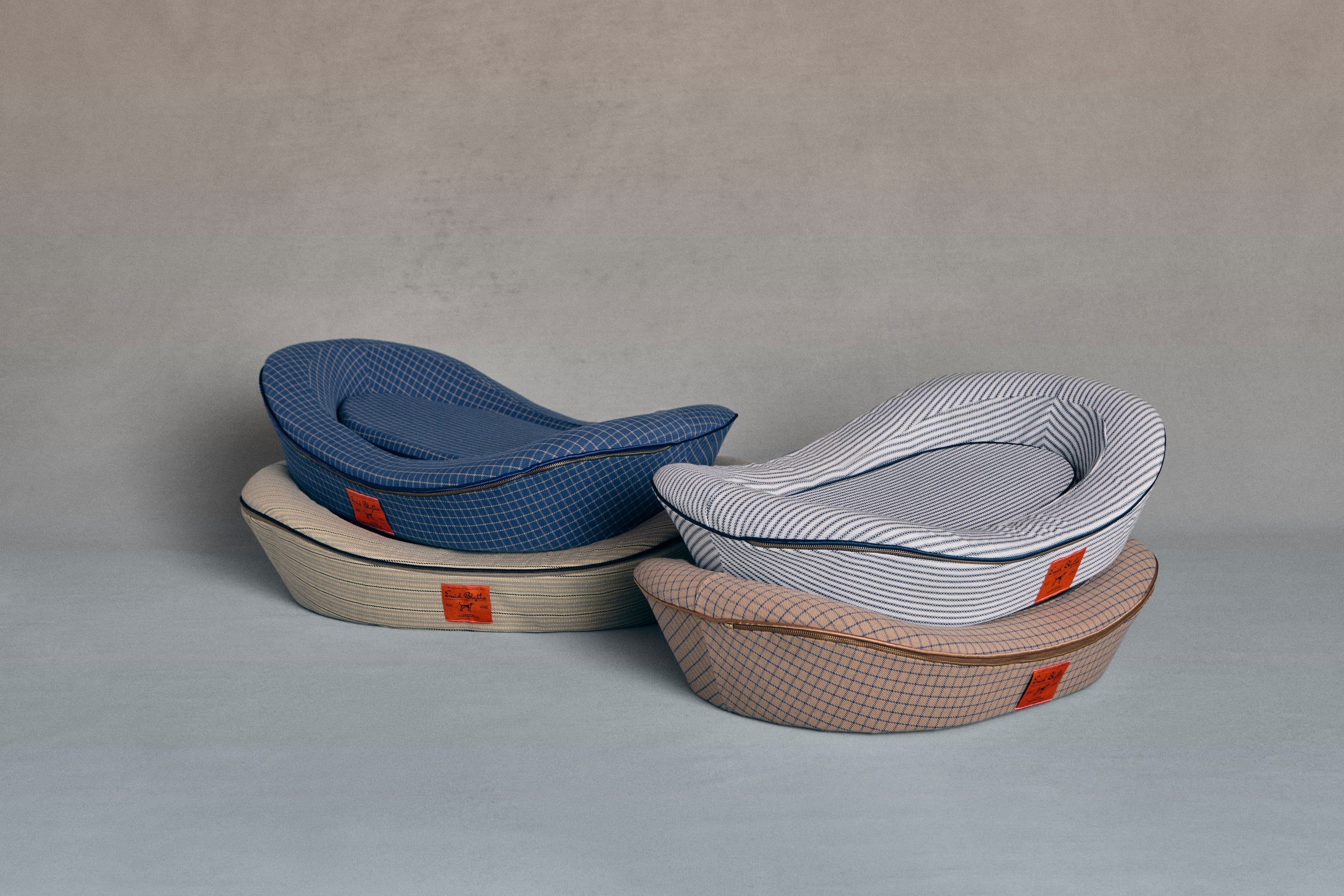
When I designed the Enid Blythe bed, easy care was not an afterthought — it was a design requirement. A luxury bed that is impractical to keep clean is not actually a luxury. It is a compromise. Enid Blythe beds are built to be as effortless to maintain as they are beautiful to look at.
Here is exactly how to care for yours.
Setting up your bed
Your Enid Blythe bed arrives in two separate packages: the bed itself, compressed for delivery, and your cotton exterior cover. Once unwrapped, the bed may take up to 24 hours to fully decompress — this is entirely normal, and simply means it has been efficiently packaged for its journey to you. Do not be concerned if it does not look its full self immediately.
The waterproof base and pillow
Inside the bed, your foam is encased in a durable black waterproof lining. This lining never needs to be removed. Should it ever need attention, simply wipe it clean with a damp cloth. This inner layer is what protects the foam from accidents — whether from a puppy still mastering toilet training or an older dog who needs a little extra grace — meaning the structural integrity of the bed is preserved regardless of what life brings.
The cotton exterior cover
This is what your dog actually sleeps against, and what you will wash regularly. Remove it by unzipping, then machine wash on a cold cycle. Hang to dry — do not put it in the dryer.
A small note on fit: because the cover is 100% cotton, it may shrink very slightly during the first few washes. This is the nature of natural fiber, and it is nothing to worry about. Once fitted back onto the bed, it will stretch and mold beautifully — rather like a beloved pair of jeans that finds its shape with wear.
How often to wash your Enid Blythe cover
Once a week is a good rhythm for most households. More frequently if your dog has been in water, mud, or has had any accidents. The ease of removing and replacing the cover means this need not feel like a chore — it takes less than a minute to unzip, remove, wash, and redress the bed.
A clean bed is a well-loved bed. The time you spend washing it is simply another form of the care you already give so willingly.
Enid Blythe makes luxury orthopedic dog beds designed for dogs and the rooms they live in. Five percent of profits support canine cancer research, in memory of Atticus.
Leave a comment
This site is protected by hCaptcha and the hCaptcha Privacy Policy and Terms of Service apply.