


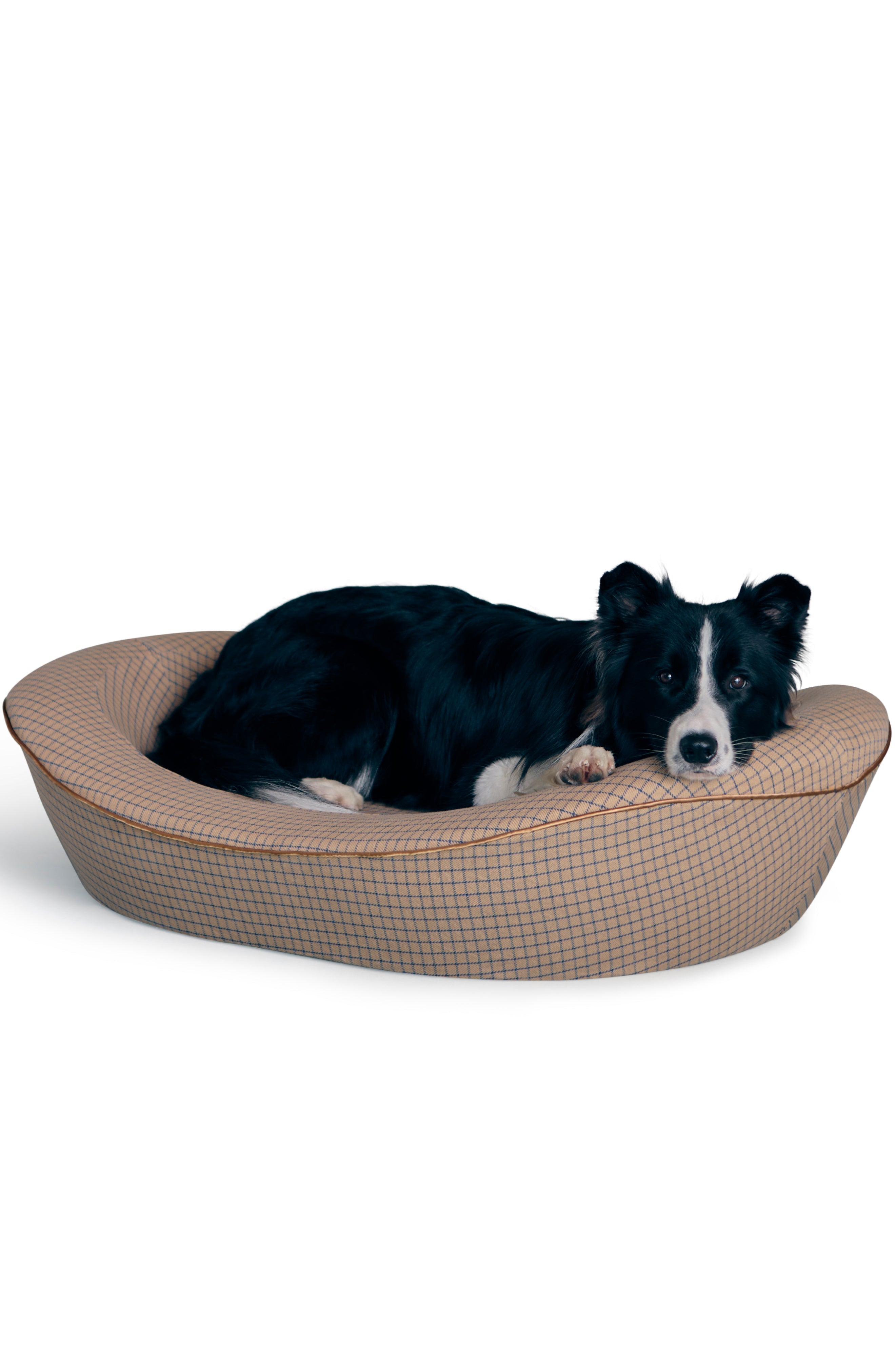
Why Does My Dog Dig, Scratch, Paw, Lick, or Pee on Their Bed? A Vet-Backed Guide to Dog Bed Behaviors
If you have ever watched your dog vigorously scratch their bed into a completely different shape before settling into it with a satisfied sigh, you are in good company. These behaviors — digging, scratching, pawing, licking, and occasionally peeing on a bed — are among the most common questions dog owners ask, and the answers are rooted in instinct, emotion, and in some cases, health. Here is what the science actually says.
Why Does My Dog Dig Their Bed?
Digging is one of the most deeply instinctive behaviors dogs exhibit, and it has almost nothing to do with your sofa cushions or the structural integrity of their bed. It is, in the truest sense, ancient.
Before domestication, dogs' wild ancestors needed to create shelter from scratch. They would dig into soil to regulate temperature — burrowing into cool earth on hot days, or creating an insulating hollow on cold nights. They would also dig to clear the area of potential hazards — snakes, insects, debris — before lying down. These survival behaviors were so essential, and so reliably advantageous, that they became hardwired into canine DNA. Your dog has no snakes to worry about, and their bed is unlikely to harbor unexpected wildlife. But the instinct fires anyway, as instincts do, because it was never dependent on conscious thought.
Behaviorists at the Whole Dog Journal note that the number one reason dogs dig in their beds is instinct — it is what their biology tells them to do before lying down, regardless of whether the surface is forest floor or memory foam. The repetitive motion also has a calming, self-soothing quality: for dogs carrying nervous energy or processing the stimulation of a busy day, digging can function as a physical release that helps them settle.
Digging becomes worth paying attention to when it is frantic, compulsive, or occurs throughout the day rather than just at bedtime. Excessive digging can be a sign of under-stimulation, anxiety, or — particularly in senior dogs — discomfort, as older dogs may dig more persistently while searching for a position that relieves joint pain. If the behavior seems driven by distress rather than ritual, a conversation with your vet is worthwhile.
Why Does My Dog Scratch Their Bed?
Scratching and digging are closely related but serve a slightly different purpose — and this one has a territorial dimension that is worth understanding.
Dogs have scent glands in the pads of their paws. When they scratch a surface, they deposit pheromones that mark the area as theirs. This is a communication behavior, not a destructive one — your dog is not trying to ruin their bed, they are claiming it. The scent left behind provides a sense of ownership and security, which in multi-dog households can become particularly pronounced as dogs assert their individual claim over shared spaces.
Scratching is also, quite simply, comfort preparation. Much as you might adjust your pillows before sleep, your dog is arranging their surface to their satisfaction — fluffing, smoothing, removing anything that feels uneven. Female dogs approaching heat or pregnancy may scratch more intensely as a maternal nesting instinct activates.
If a new pet or something else increases your dog's stress levels, you might notice scratching increase. Sometimes this habit can spill over into anxious behavior where the scratching no longer helps them relax — in those cases, a veterinarian's guidance is advisable.
Why Does My Dog Paw at Their Bed?
Pawing is a gentler, more investigative version of the same instinctual set of behaviors. Where scratching and digging are preparation and territory, pawing tends to be sensory — your dog is gathering information about the surface, testing its texture and temperature, and confirming it is safe before committing to rest.
Pawing can also be communicative. Dogs paw at things they want to interact with, and if your dog paws at their bed while looking at you, they may simply be inviting engagement or expressing that something about their sleep space feels off. Old dogs in particular are thought to paw and scratch at their bed because some part of their body hurts, and they are searching for a more comfortable position. If an older dog is pawing persistently and taking a long time to settle, it is worth considering whether their bed is providing adequate orthopedic support.
Why Does My Dog Lick Their Bed?
This is the behavior that tends to worry owners most, and in most cases the explanation is entirely benign — though persistent or sudden-onset licking warrants a veterinary check.
The most common reason dogs lick their bed is comfort and self-soothing. Licking releases endorphins — the same feel-good hormones that make the behavior inherently calming. A dog licking their bed at the end of a stimulating day, or when they are settling to sleep, is often doing what humans might do when they take a deep breath or stretch: winding down through repetitive, physically satisfying motion. Bed covers often carry the scent of their owner, which can provide a sense of security and comfort — dogs with strong attachments to their humans may lick the covers as a way of feeling closer to them, especially when left alone.
Licking can also be investigative. Dogs experience the world primarily through scent and taste, and a bed that carries interesting smells — a previous owner's scent, food residue, or the trace of another animal — is worth exploring thoroughly. This is entirely normal.
Where licking warrants attention is when it is new, excessive, compulsive, or accompanied by other symptoms. According to the Journal of Veterinary Behavior, gastrointestinal disease should be considered in dogs that are excessively licking surfaces — nausea frequently manifests as surface licking in dogs, as does pain, dental discomfort, and certain metabolic conditions. According to one study of 19 dogs, 74% were found to lick objects excessively because of underlying health conditions. If your dog has developed a sudden or intense licking habit, a veterinary visit is the right first step before attributing it to behavior alone.
Why Does My Dog Pee on Their Bed?
This is perhaps the most frustrating behavior on this list, and it is important to begin with one thing veterinary behaviorists are clear about: this is highly unlikely to be something that happens because the dog is mad at you or trying to get back at you for something. We know that animals share many of the same emotions that humans do, but there is minimal if any evidence to suggest that four-legged animals act out of spite or vengeance.
There are four main reasons a dog may pee on their bed, and the first step is always to identify which applies.
Medical causes should be ruled out before anything else. Urinary tract infections, bladder stones, hormonal imbalances, and age-related incontinence can all cause a dog to lose control of their bladder while resting. Senior dogs can experience incontinence that causes them to dribble urine while sleeping, and cognitive issues can cause dogs to forget long-held potty training habits. Any sudden change in bathroom behavior deserves a veterinary assessment.
Incomplete house training is a common cause in puppies and recently adopted adult dogs. Young puppies physically cannot hold their bladders through the night, and a bed — which is warm, soft, and familiar — is simply the closest available option when the need arises.
Anxiety and stress are significant contributors. Sites for urine marking are often chosen because they are in a location an animal feels is necessary to mark to increase their own feelings of safety and security. The anxiety might be due to changes in the composition of the home — new people, new animals, new items — that worry the pet and lead to them feeling the need to mark items with their own scent. A dog urinating on their bed when left alone, or following a significant household change, may be expressing emotional distress rather than deliberate misbehavior.
Territorial marking is the fourth cause, most common in intact males but not exclusive to them. Studies have shown dogs don't mark to claim territory so much as to leave a message — more like graffiti that says "I was here" than a declaration of ownership. Neutering or spaying can reduce marking behavior significantly, though it does not eliminate it entirely in all dogs.
In every case, thoroughly cleaning the bed with an enzymatic cleaner is essential — any residual urine scent will signal to the dog that this is an appropriate place to go again.
What These Behaviors Tell Us About Our Dogs' Emotional Lives
Taken together, these behaviors reveal something important: a dog interacting with their bed — digging, scratching, licking, pawing — is almost always a dog expressing a healthy emotional and instinctual life. The nesting ritual is an expression of contentment and security. The scent marking is an expression of belonging. The licking and pawing are expressions of curiosity, comfort, and attachment.
The bed is not just where your dog sleeps. It is where they process their day, regulate their emotions, and feel most entirely themselves. Understanding that is the beginning of understanding them.
Enid Blythe makes luxury orthopedic dog beds with 100% cotton removable covers and a built-in waterproof lining — designed for everything life with a dog involves, including the moments that require a quick wipe-down.
Leave a comment
This site is protected by hCaptcha and the hCaptcha Privacy Policy and Terms of Service apply.