


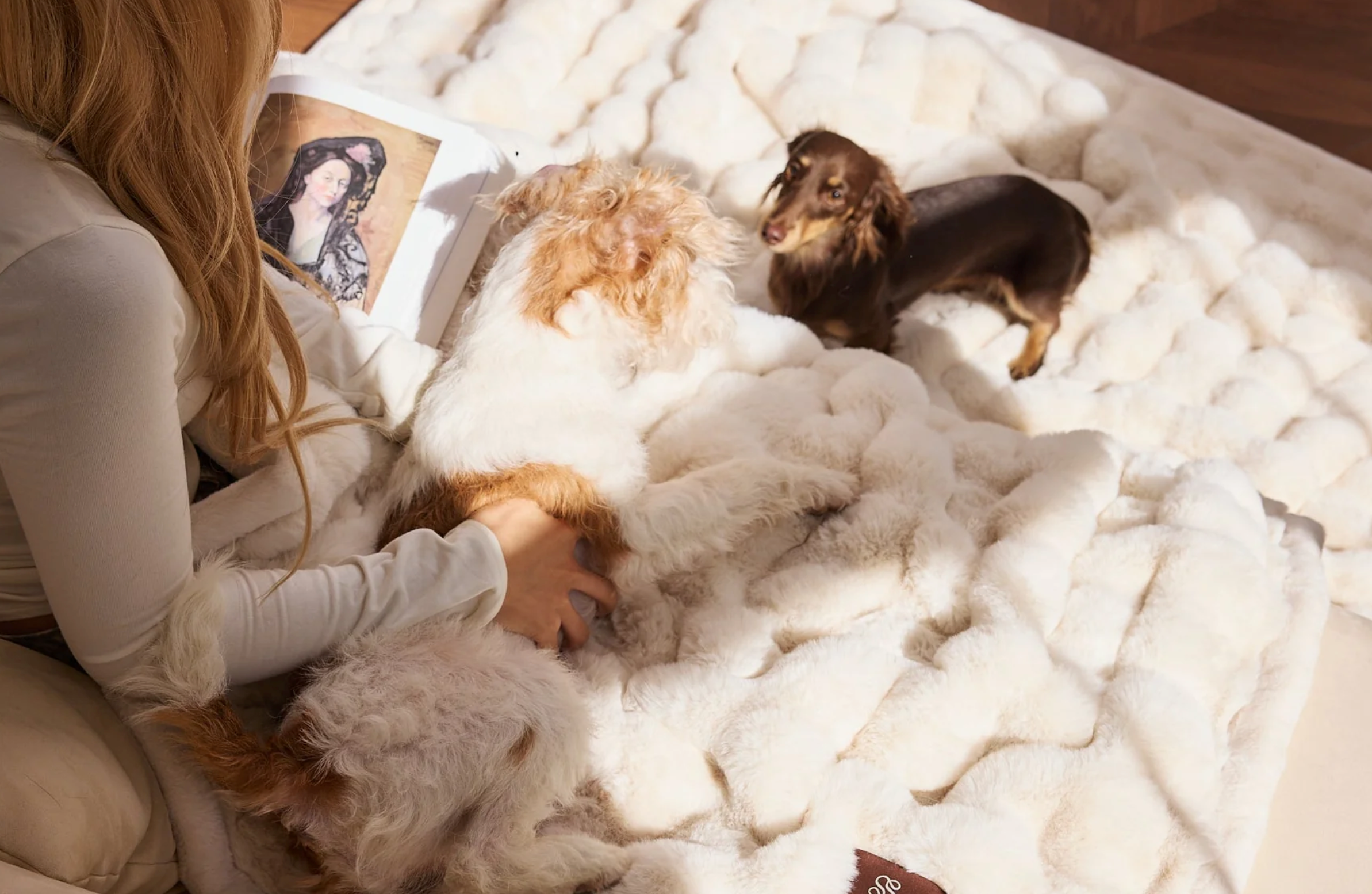
Should Dogs Sleep on Soft Beds? The Science, the Preference, and the Perfect Solution
It is one of those questions that sounds simple until you start looking for a real answer. Every dog owner has watched their dog abandon a perfectly good bed for the cold kitchen floor and wondered whether they have been getting it wrong. The answer, as it turns out, is more nuanced than most pet care content admits — and it starts with understanding what your dog actually needs from the surface they sleep on.
What the Science Says About Soft Beds and Dogs
The relationship between softness and support is not straightforward, and conflating the two can lead owners toward beds that feel luxurious but fail their dogs where it matters most.
A 2014 study published in the Journal of Veterinary Behavior found that the majority of dogs preferred softer bedding, spending significantly more time on cushioned surfaces than on harder alternatives — though researchers noted that age, body condition, and history of joint issues meaningfully influenced individual preferences.
However, softness and support are not the same thing — and this distinction is critical. PetMD notes that while soft beds may feel luxurious, they can lack the structural integrity necessary for dogs that need orthopedic support. A bed that is too soft allows joints to sink unevenly into the surface, which can increase rather than relieve pressure on hips, elbows, and shoulders. Some dogs with joint pain actually choose firmer surfaces precisely because soft beds let their joints sink awkwardly — a counterintuitive but well-documented behavior.
The veterinary consensus points to a specific sweet spot: a bed that is firm enough to provide structural support and prevent "bottoming out" — where a dog's weight compresses the surface all the way through — but soft enough at the contact surface to distribute pressure evenly and provide comfort. Vets often describe this as orthopedic-grade support: firm enough to hold structure, soft enough for comfort.
The Case for Orthopedic Support
Dogs spend between twelve and sixteen hours a day asleep. The surface they rest on is not incidental to their health — it is one of the primary environments in which their body either recovers or accumulates stress. For large breeds, senior dogs, and any dog with joint conditions, this matters enormously.
High-density orthopedic memory foam works by conforming to the dog's body shape, distributing weight evenly across the sleeping surface rather than allowing pressure to concentrate at joints. Orthopedic beds support proper alignment and relieve pressure on hips, elbows, shoulders, and spine — and for senior dogs, the right bed can extend mobility and reduce the frequency of medication needed for joint pain.
Crucially, you do not need to wait until your dog is old or showing signs of pain before this matters. An orthopedic bed is as much a preventative investment as a remedial one — and the earlier a dog sleeps on a properly supportive surface, the less joint wear accumulates over their lifetime.
But Every Dog Is Different
Here is where the science gives way to the individual — and where paying attention to your own dog matters more than any general guideline.
Cuddlers who curl up often prefer softer, nest-style beds that envelop them, while spreaders who sleep sprawled prefer flatter surfaces that support full-body extension. Large breeds generally benefit from firmer support, while smaller dogs may genuinely prefer softer beds that provide warmth and a sense of enclosure.
Temperature also plays a role. Dogs who run warm — double-coated breeds, brachycephalic dogs, larger breeds with higher metabolic heat output — may actively seek cooler, less insulating surfaces, particularly in summer. Dogs who feel the cold — smaller breeds, thin-coated dogs, senior dogs with reduced circulation — gravitate toward warmer, softer materials that retain heat.
And some dogs simply have a preference that defies easy categorization. If your dog consistently leaves their bed for the floor, pay attention. They may be too warm. They may need more firmness. Or they may simply be telling you something about the surface that the label doesn't.
The Perfect Solution: Orthopedic Foundation, Soft Surface
The most intelligent approach to dog sleep is not choosing between support and softness — it is providing both, in the right order.
Orthopedic support belongs in the base. It is structural, non-negotiable, and works by being firm enough to keep the dog's joints properly positioned throughout the night. Softness and warmth belong at the surface — the layer the dog actually feels against their body, and which can be adjusted for season, preference, and individual comfort.
This is exactly the philosophy behind two brands that approach dog sleep from the same conviction: that dogs deserve what we give ourselves, without compromising the rooms they live in.
Enid Blythe builds luxury orthopedic dog beds around high-density memory foam that provides genuine joint support, housed in 100% cotton covers in fabrics designed to belong in a considered home. The patent-pending den-shaped design with elevated sides for head resting, YKK metal zippers, and waterproof lining means every bed is built for the full reality of a dog's life — while looking like it was chosen for the room, not hidden from it. Founded by Elizabeth Goodman in memory of her Rottweiler Atticus, who slept in the first Enid Blythe bed during his final months with cancer, five percent of profits go to canine cancer research. The bed is the foundation — firm, supportive, and beautiful.
Snuggle & Stay exists because its founder — a fellow small business owner and dog parent of Ollie and Mateo — spent years solving a problem most pet product brands pretend doesn't exist: seventy percent of us share our spaces with our pets, and the bedding industry has almost entirely ignored us. After months of testing bamboo, silk, cotton, and TENCEL™ Lyocell with friends and family tracking fur resistance, cooling, and durability, TENCEL™ won. The result is the Everywhere Blanket — faux fur so plush it causes arguments between dogs and their owners over who gets to use it, combined with waterproof protection, machine washability, and a commitment to materials that won't mat or shed over time. Like Enid Blythe, Snuggle & Stay is a small, woman-owned brand built from a genuine problem and a refusal to settle for the ugly, impractical solutions the market offered. It is the soft surface layer — the part your dog actually burrows into, drapes across the Enid Blythe bed's elevated sides, and curls beneath on a cold evening.
Together, they solve the problem completely. The Enid Blythe bed provides what your dog's joints need. The Snuggle & Stay Everywhere Blanket provides what their instinct for comfort and warmth is looking for. Your dog gets orthopedic support and a genuinely soft sleeping surface. You get a setup that looks beautiful in the room, survives real life with a dog, and can be cleaned without ceremony. Two small, woman-owned brands. One complete solution.
How to Read Your Dog
The best guide to what your dog needs is your dog. Watch where they choose to sleep when given options — floor versus bed, one room versus another. Notice whether they are slow to rise after rest, circle and shift before settling, or abandon their bed for a harder surface on warm evenings. Restlessness — moving from bed to floor to couch and back again — is often one of the clearest signs that a dog cannot find a comfortable position, and is worth paying attention to before it becomes a health issue.
If your dog sleeps deeply, rises easily, and returns to their bed voluntarily, you have got it right. If they don't, something about the surface needs adjusting — and the answer is almost always found in the interplay between support and softness, not one at the expense of the other.
Enid Blythe makes luxury orthopedic dog beds designed for dogs and the rooms they live in. Snuggle & Stay makes premium pet-proof bedding for homes where pets are family.
Leave a comment
This site is protected by hCaptcha and the hCaptcha Privacy Policy and Terms of Service apply.